How to Price Thrifted Clothes for a 60% Margin
Published by Reseller Editorial Team · 6 min read · October 2026
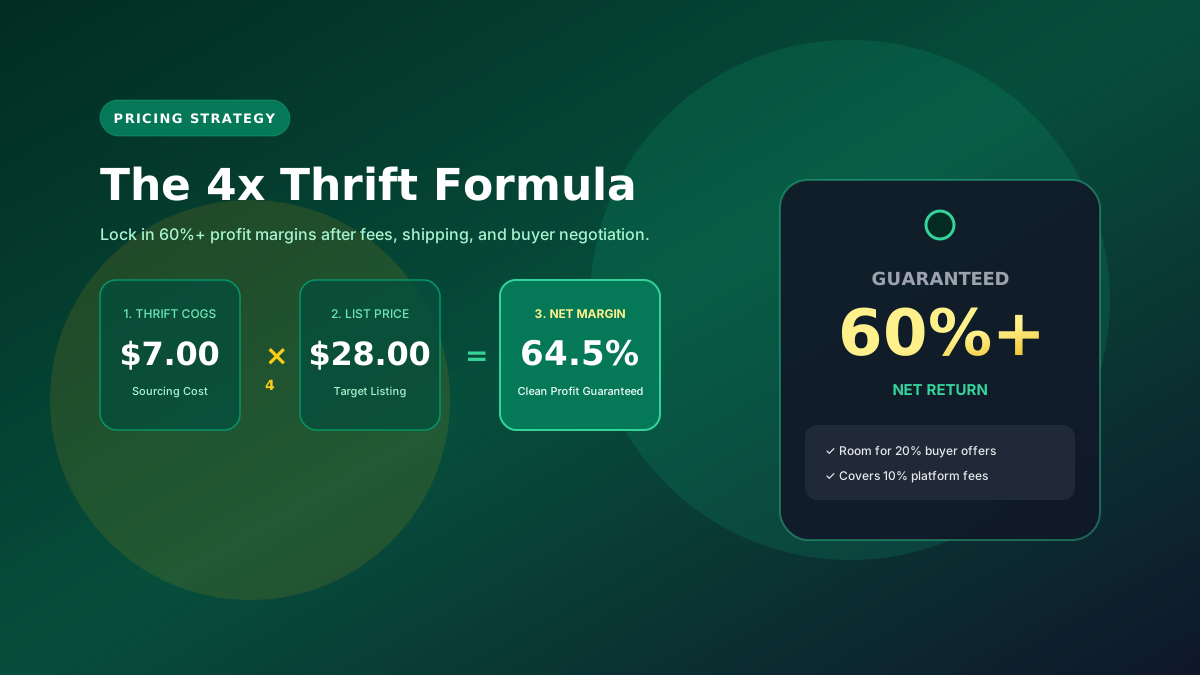
Pricing secondhand clothes is one of the toughest challenges for beginner resellers. If you price too high, your listings sit stagnant for months gathering likes but zero purchases. If you price too low, you leave substantial money on the table and risk working for less than minimum wage after accounting for photography, measurements, and packaging.
In this guide, we share the exact pricing formula used by top six-figure clothing resellers to protect a minimum 60% net profit margin on every item.
The Golden Rule: The 4x Sourcing Multiplier
As a general benchmark across platforms like Depop, Poshmark, and eBay, aim to price your items at four times your sourcing cost (Cost of Goods Sold - COGS).
Why the 4x Multiplier Works:
- 25% covers your initial inventory purchase cost.
- 15% covers platform commission and payment processing (Depop/Poshmark/Mercari).
- 60% remains as your gross operating profit to cover packaging, tax, and reinvestment.
Psychological Pricing: Building in Room for Offers
Over 75% of transactions on modern resale apps occur through buyer offers rather than instant "Buy It Now" clicks. If your bottom-line acceptable price for a vintage jacket is $40, never list it for $40.
Instead, list the jacket at $48.00 or $52.00. When a prospective buyer sends a 15% to 20% discount offer, you can accept immediately. The buyer feels thrilled that they negotiated a bargain, and you secure the exact profit margin you planned from day one.
Check Your Numbers Before You Source
Keep our free Reseller Fee & Profit Calculator bookmarked on your phone’s home screen. While standing in the thrift store aisle, plug in the tag price and your target sale price to verify whether the margins justify the purchase.